
I Interviewed Will Smith About His Upcoming Show
In his new docuseries, 'Pole to Pole,' the actor travels through jungles, deserts, and polar ice. Outside sits down with Smith to talk about how filming the show pushed him to reckon with self-discove

Last week, I went to LA to report on a story for work: Will Smith is coming out with a new docuseries for NatGeo in which he travels to the seven continents over 100 days, going on various adventures. He ice climbs; he bungee jumps; he rappels deep into a cave in the Amazon in search of venomous creatures. Honestly, it’s a good watch. But the most interesting part to me was how candidly he spoke about grappling with the last few years following the 2022 Oscars when he slapped Chris Rock.
Smith chose to address the fallout—and how he’s been grappling with it—head-on in Pole to Pole. “I tasted the top of my success, fame, money, and then watched it fall apart. I’m trying to find ways to stop worrying about that,” he says on camera.
I asked Smith about his choice to include that part in the series, along with lots of other stuff. You can read the full story here:
EXCLUSIVE: Will Smith’s Hardest Journey Yet Takes Him to the Ends of the Earth
In his new docuseries, ‘Pole to Pole,’ the actor travels through jungles, deserts, and polar ice. Outside sits down with Smith to talk about how filming the show pushed him to reckon with self-discovery and facing fear.
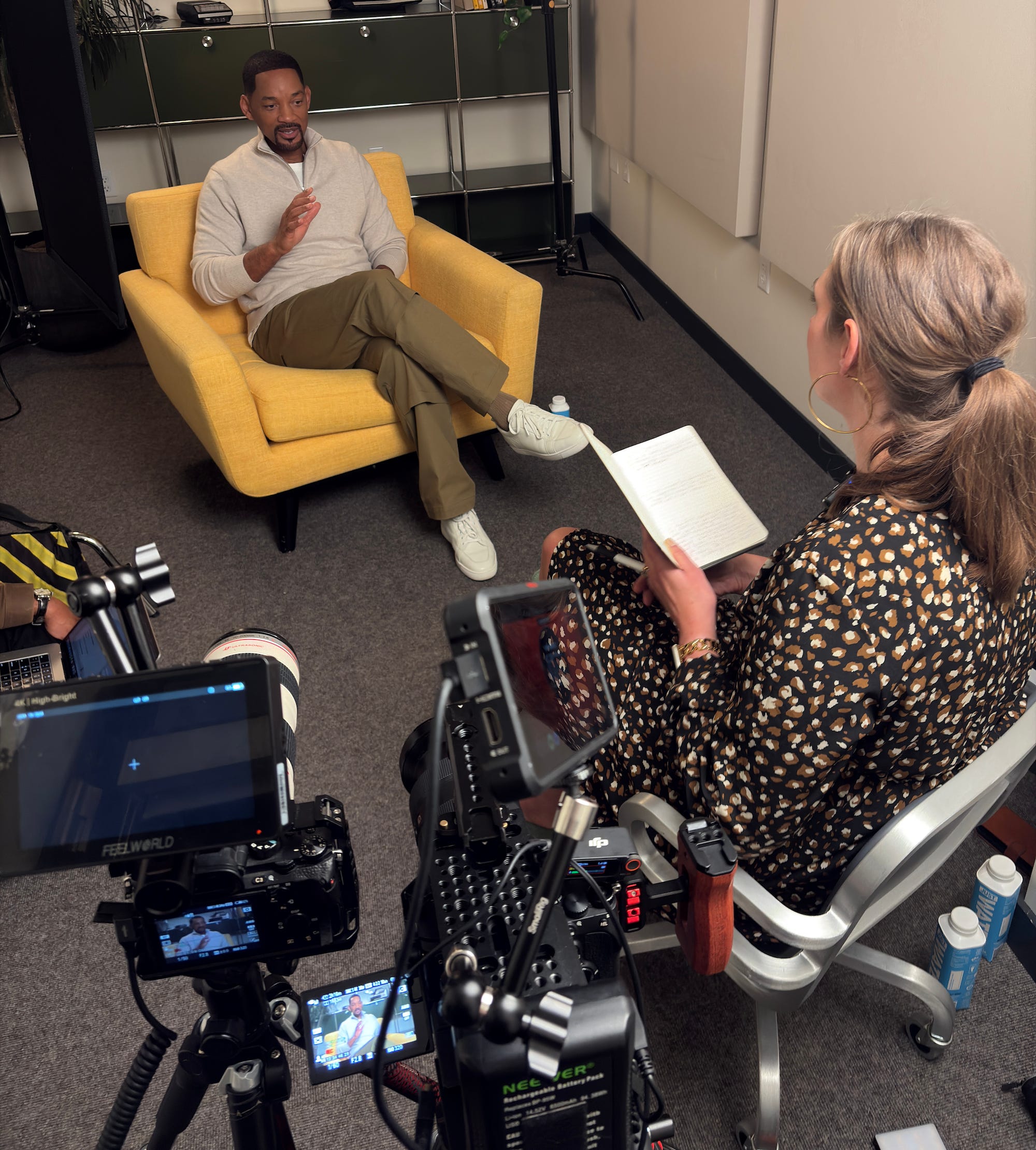
Photo courtesy Abigail Rath
What I’m Reading
The Surprisingly Tender Art of Rat Taxidermy
I joined a taxidermy class and discovered a craft that’s far more thoughtful than I expected
By Blair Braverman
His skin was tough but stretchy, and scraping it with a blade felt oddly satisfying: fat gathered in strands and gelatinous lumps, and I pinched it away with my fingertips, time and again. After a few minutes, I stopped feeling nauseous, entranced by the precision of the work: the paper-thin ears, the lips that flapped open, the sandpaper scales of my rat’s tail. In my mind, I named him Meatball, in honor of my one-year-old daughter’s current favorite word. It just felt right.
The Anti-Materialist Christmas: Rituals Around the World That Swap Gifts for Meaning
These seven global traditions show a different side to the season; one that’s more communal, more reflective, and far less materialistic.
By Laura Hall
In Iceland, publishers release a flurry of new releases in the run-up to Christmas – a seasonal phenomenon known as the jólabókaflóð, or “Christmas book flood”. The tradition dates back to World War Two, when most goods were rationed except paper, making books the most practical Christmas gift. Today, it helps support the niche Icelandic publishing industry; strengthens a love of the Icelandic language, which is at risk of dying out; and delights booklovers nationwide.
On 24 December, families exchange presents, eat Christmas dinner and then spend the evening reading their new books by candlelight, perhaps with a box of chocolates and a drink beside them. It’s a ritual that feels distinctly Icelandic, but one of the easiest to replicate anywhere.
What Is a Body For?
One desire felt like it would make me more of who I already was, and the other would unmake me entirely.
By Diana Saverin
The grassroots “race” has a summer and a winter version, both started in the 1980s. The race involves a dozen (or a couple dozen) people using human power to get from the starting point to the finish, navigating through the backcountry with no outside help. While there is sometimes a checkpoint between beginning and end, participants can choose their routes: There are no trails. Summer participants often backpack and packraft, while winter participants use skis. When we signed up for the winter version of the event, we were signing up to travel more than 180 miles across the Brooks Range in a week.
The “point” of the Classic, if there is one, is to do something hard and test your limits. This was the kind of feat I wanted my body to be capable of. I saw physical exertion as an essential part of myself and my worth, the part I was afraid of losing if I got pregnant. I wanted to push myself in this very specific way while I still could—before giving my body over to another purpose.
Last But Not Least
